Closing the Gap Between
Expertise and Community Trust
American Climate Partners is a conservation organization working to restore river ecosystems through large-scale ecological interventions grounded in scientific research and cross-disciplinary expertise.
In Rapidan, Virginia, their work centered on the removal of the historic Rapidan Mill Dam as part of a federally funded restoration effort supported by NOAA and a coalition of engineers, ecologists, and preservation specialists.
It’s the kind of work that depends on both technical rigor and public trust. The work had progressed on research, permitting, and design; the technical clarity was not the issue.
By the time the project reached the community, people weren't responding to the science, but by the assumptions that took shape in the gap between planning and participation. Concerns circulated without context. By the time formal engagement began, the work was already being interpreted through distance rather than dialogue.
American Climate Partners needed to repair what broke when the local community felt talked at, instead of heard.
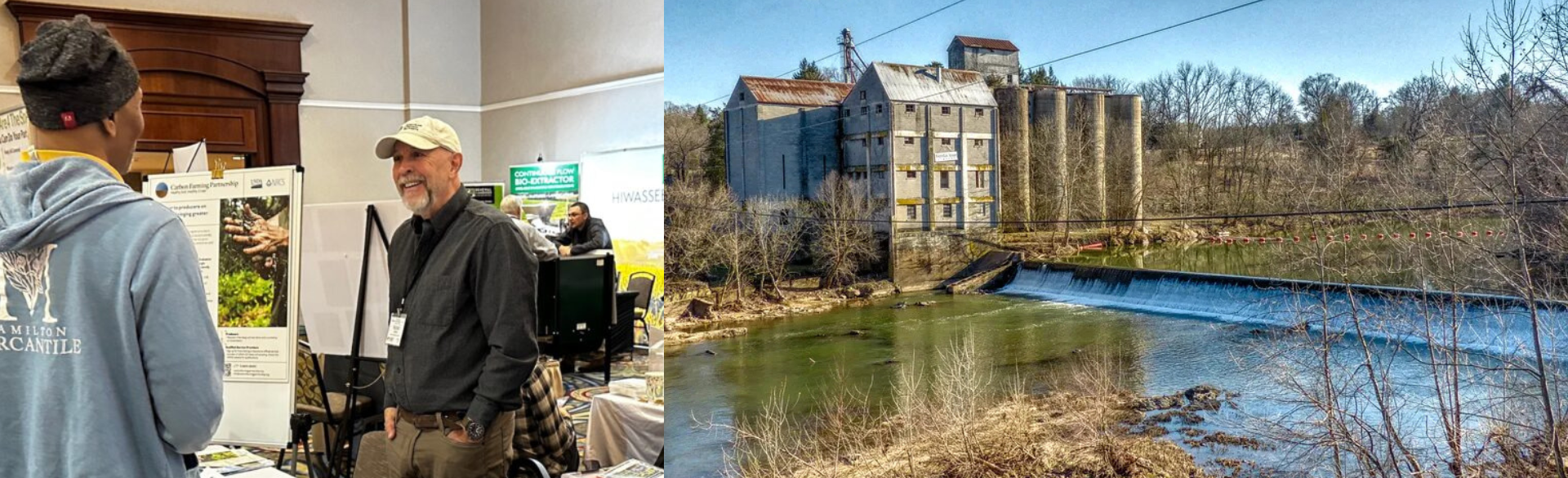
&Human came in to help design the conditions for a different kind of conversation to take place.
The first shift was with the experts themselves. Scientists, engineers, and project leaders were supported in moving beyond a model of explanation and into a more relational form of engagement—learning how to receive uncertainty, frustration, and skepticism without defaulting to correction or defense. The work was subtle. Less about what was said, and more about how it was held.
The project's specialists and experts noted how the experience fundamentally changed how they understood their role in public-facing work:
“I’ve presented this research many times, but this asked something different of me and it changed how I think about trust.”
From there, we redesigned the structure of the forum itself.
Instead of beginning with presentation, the community first encountered the project through informal, one-on-one exchanges with the experts behind it. Residents moved through a space where research, history, and engineering were visible and accessible before any formal program began. Questions were invited in advance through a trusted local journalist who had become a consistent source of community information.
When the formal session began, the format followed a deliberate sequencing of questions—those gathered ahead of time, then written responses from the room, and only then live dialogue.
The pacing changed what the room was able to hold.
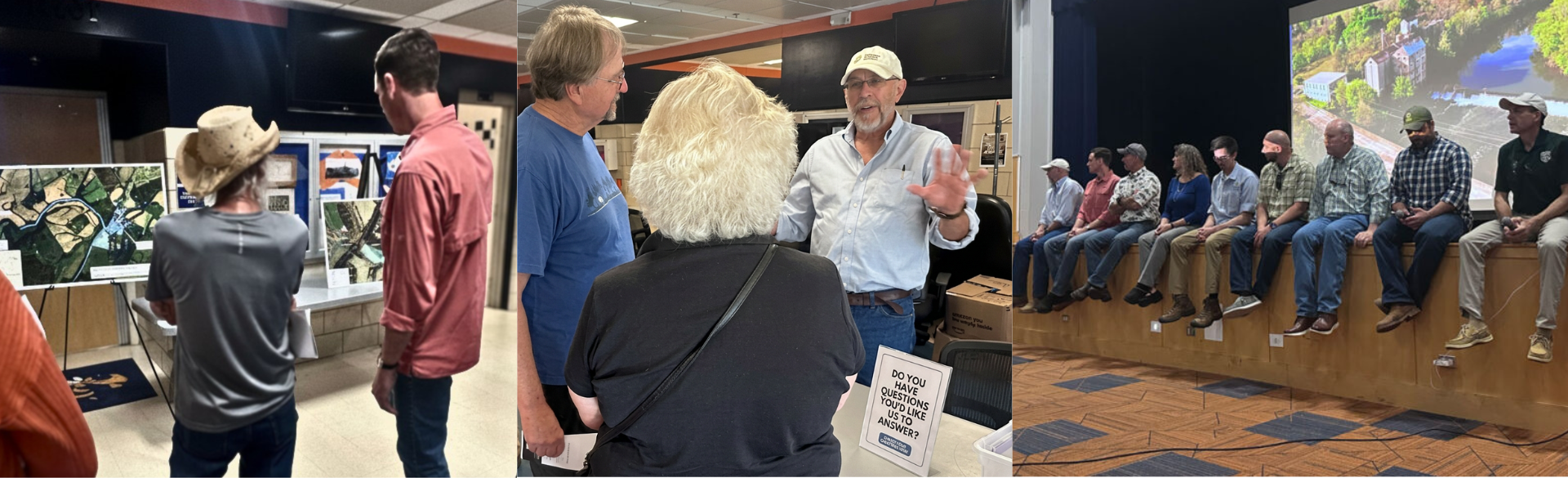
What emerged was not a single moment of resolution, but a shift in tone that was immediately noticeable to those in the room. Conversations continued beyond the structured program. Skepticism softened into inquiry in some exchanges. In others, long-held positions were expressed with less distance and more openness.
After four years of stalled progress, the event engaged 250 residents, and the nature of the dialogue began to shift from adversarial to constructive.
One resident, a woman whose family dates back to the founding of the village, remarked afterward:
“For the first time, I feel like they actually want to know what I think.”
In the weeks that followed, ongoing advisory pathways and communication channels were established, creating a repeatable model for trust-building that extended beyond the forum itself. A single gathering does not resolve a long-standing trust deficit.
But it can change the conditions under which future conversations become possible.
And in this case, it did.
We believe the brightest future is human. We partner with those bold enough to build it
without compromise.